
Palouse Mindfulness
Designing a Calmer MBSR Learning Experience
Self-Directed Redesign Concept | Mindfulness Course Platform
2026
BRAND STRATEGY · INFORMATION ARCHITECTURE · VISUAL SYSTEM DESIGN · CREATIVE & ART DIRECTION · UX/UI
Overview
Palouse Mindfulness offers a free, 8-week online Mindfulness-Based Stress Reduction (MBSR) course, based on the program developed by Jon Kabat-Zinn. While widely respected in clinical settings, the existing platform was dense and difficult to navigate particularly for younger, digital-native users.
This redesign focuses on making the experience more intuitive and engaging without diluting the integrity of the practice. The goal was to support open access to mindfulness education through a calmer, more navigable digital environment.
I.
Framework
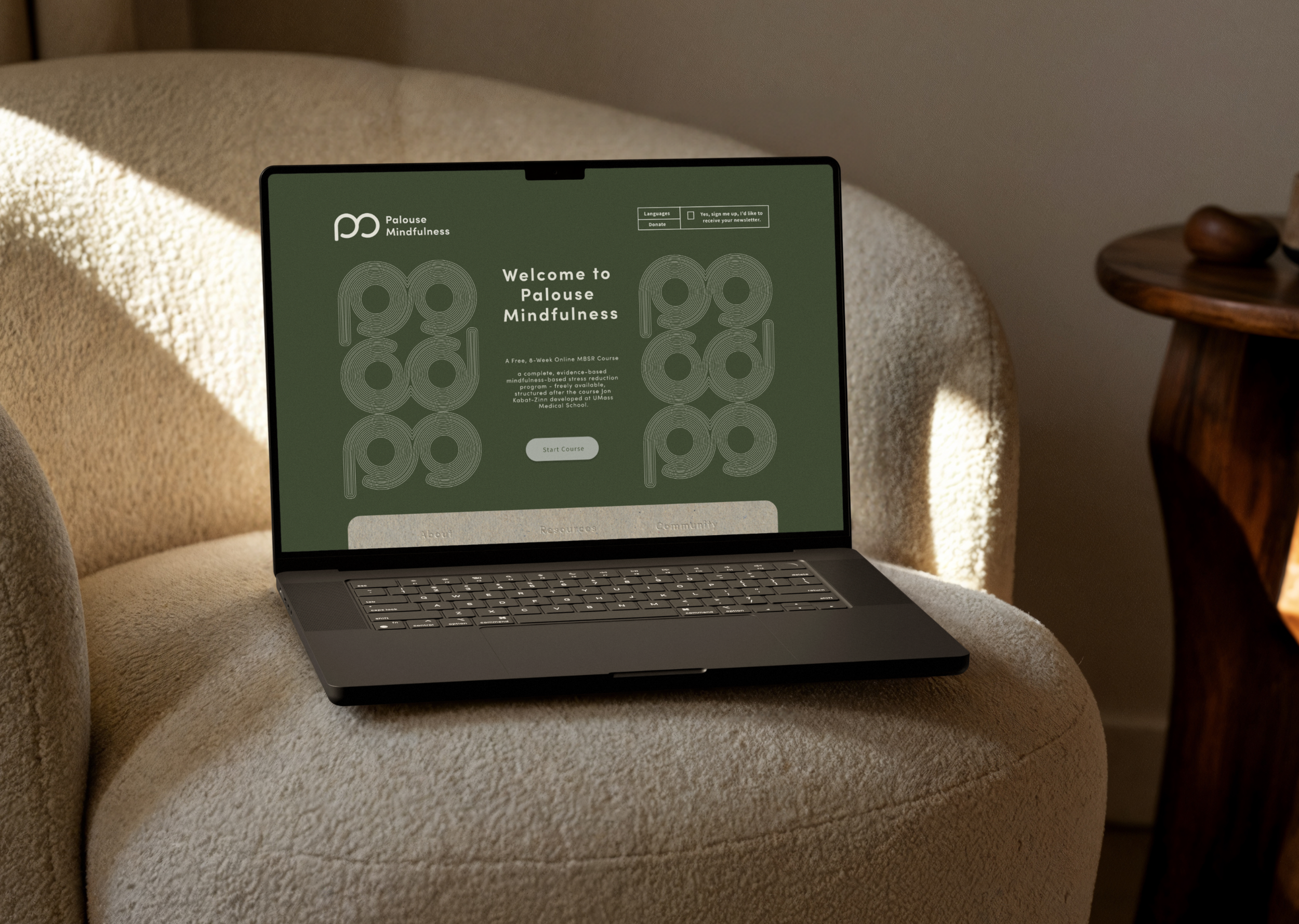
The redesign treats an eight-week clinical curriculum as an editorial problem before it's an interface problem: how do you hold someone's attention across two months of dense material without the density itself becoming the reason they quit. The layout borrows from long-form editorial design — generous space, clear hierarchy, a paced rhythm between reading and reflection — paired with tactile references like paper texture that root the digital experience in something calmer than a typical course platform.
A flexible tab system does double duty as navigation and progress tracking, so a learner always knows where they are in the arc without the structure feeling prescriptive. Dense material — research citations, case studies — is contained in modular blocks and accordions rather than flattened into one long scroll. Short reflective prompts interrupt the reading only when interruption serves the practice, not before. The companion manual was redesigned as an offline extension of the same system, so the experience doesn't end when the screen does.
II.
III.
Outcome
The result is a curriculum that reads as considered rather than clinical — structured enough to guide, open enough not to feel like homework. The system's real test isn't week one, it's week six: whether the architecture still holds someone's attention once the novelty is gone. Pairing the digital experience with an offline companion was a deliberate bet that sustained practice, not first-session polish, is the actual measure of success for a tool like this.


CREDITS
Course content and curriculum by
Dave Potter and
Palouse Mindfulness
Photography
Unsplash
Pexels
Digital Art & Design
Tiffany M. Gerdes
Related Work
TEXTILE DESIGN · MATERIAL RESEARCH & DEVELOPMENT · BRAND STRATEGY & DESIGN · CURATION · PROJECT MANAGEMENT & GALLERY COORDINATION
LANDSCAPE DESIGN · MATERIAL RESEARCH & DESIGN DEVELOPMENT · SOURCING · EXPERIENCE DESIGN
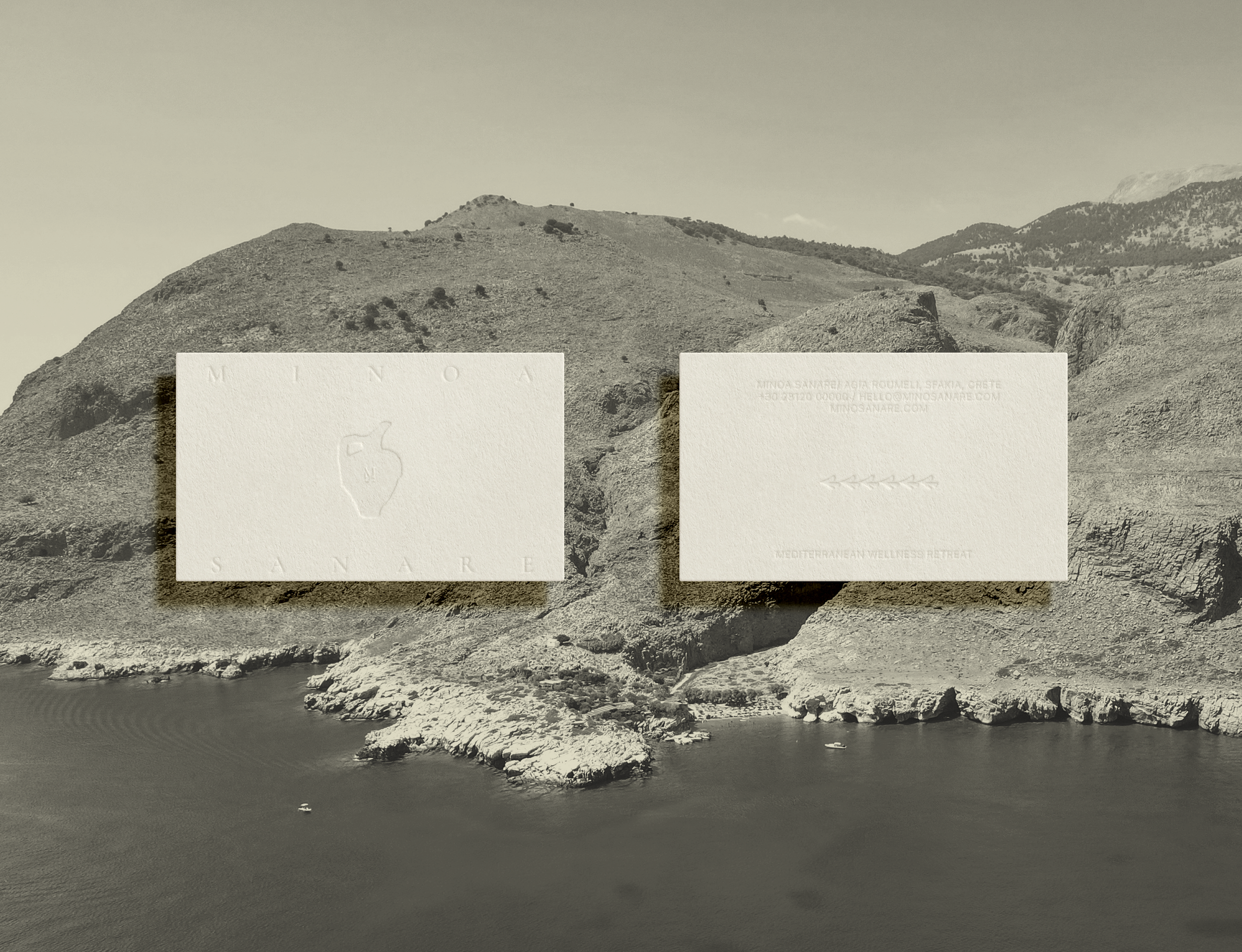
CREATIVE DIRECTION · BRAND STRATEGY · BRAND IDENTITY · EXPERIENCE DESIGN · EDITORIAL DESIGN

BRAND STRATEGY · BRAND GUIDELINES · VISUAL SYSTEM DESIGN · ART DIRECTION